
RESOURCE
LIBRARY

FILTER
RESOURCES
FILTER
RESOURCES
FILTER RESOURCES
Select multiple to filter
Search results
Browse our library of resources and publications, developed by Safe and Equal in partnership with organisations from across the sector. This library is sorted by the date that the resource was added to the library.
The PreventX 2024 conference brought a fresh focus on how to frame and communicate primary prevention. The conference showcased and built knowledge about how to craft messages that resonate and effect real-world, positive change.
Women with Disabilities Victoria (WDV) and Safe and Equal have partnered to produce a suite of eLearn Modules to enhance practice capability of practitioners supporting victim survivors with disabilities. This Webinar is centred around the launch of the first module: ‘Unlearning Ableism: from Bias to Best Practice’.
Organising events and having a survivor advocate talk about their lived experience can be powerful ways of engaging audiences and sharing messages to promote change. But how can we ensure that these forums are effective, safe and ethical?
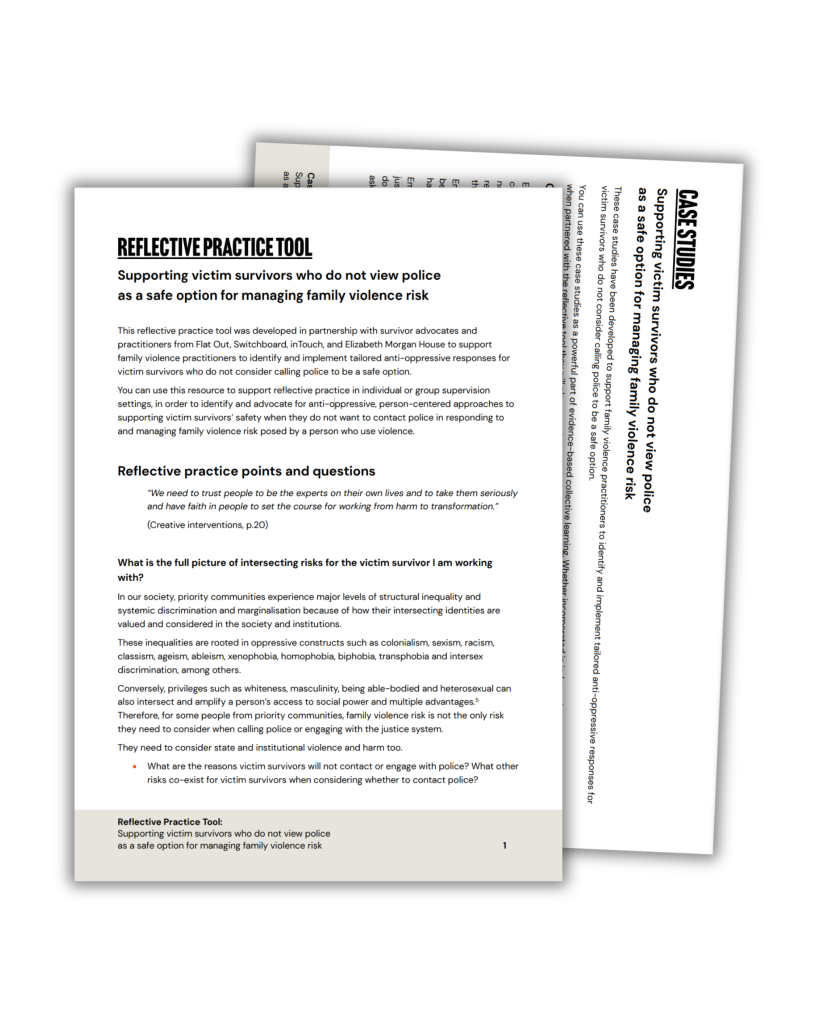
This reflective practice tool and these case studies were developed in partnership with survivor advocates and practitioners from Flat Out, Switchboard, inTouch, and Elizabeth Morgan House to support family violence practitioners to identify and implement tailored anti-oppressive responses for victim survivors who do not consider calling police to be a safe option.
Aboriginal and Torres Strait Islander people have the right to access culturally responsive, inclusive, and equitable family violence support, no matter what kind of service they go to. It is crucial that non-Aboriginal family violence services uphold Aboriginal and Torres Strait Islander people’s rights to self-determination, choice, and safety.

This report is a summary of evaluation of the Statewide Prevention Workforce Development program in 2023 – 2024.

Learning Together describes the benefits of Communities of Practice for the Victorian primary prevention workforce and summarises Safe and Equal’s approach to delivery.

Partnerships are a crucial tool for strengthening community-led primary prevention with multicultural communities, and strengthening practice more broadly within organisations seeking to engage multicultural and faith communities. Taking a partnership approach means looking closely at how organisations work together equitably, not just their project outcomes.

This report describes the findings of a project aimed at strengthening the foundations for planning and implementing primary prevention workforce development in Victoria.
BACK TO TOP
The purpose of this resource is to share existing approaches to partnership to advance this work in primary prevention and to share experiences about how to build equity in such partnerships.
Informed by insights from lived experience advocates, this resource supports specialist family violence practitioners to strengthen their capacity to provide effective advocacy and support to misidentified victim survivors, deepen their understanding of misidentification and its impacts and address and mitigate the impacts of misidentification on victim survivors and their families.
This webinar brought together leaders from the specialist family violence response sector to explore what effective supervision looks like in practice.
This report is a summary of evaluation of the Statewide Prevention Workforce Development program in 2024-2025.