
RESOURCE
LIBRARY

FILTER
RESOURCES
FILTER
RESOURCES
FILTER RESOURCES
Select multiple to filter
Search results
Browse our library of resources and publications, developed by Safe and Equal in partnership with organisations from across the sector. This library is sorted by the date that the resource was added to the library.
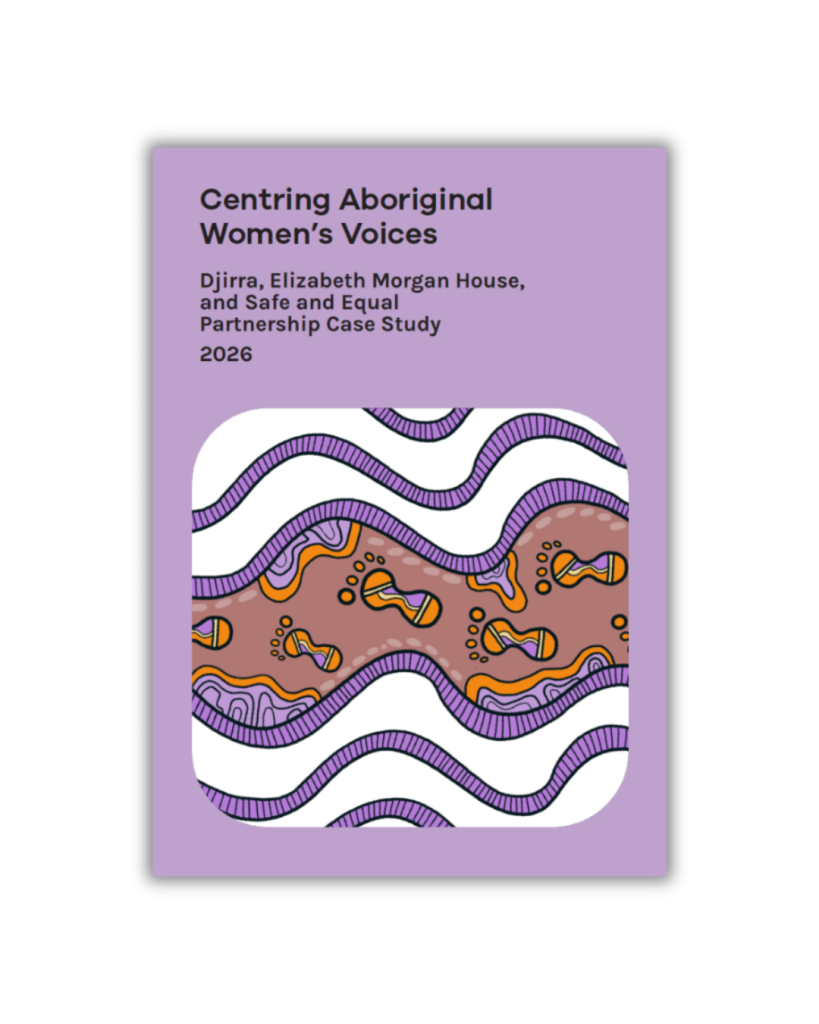
This resource is intended for non-Aboriginal family violence organisations seeking to genuinely centre Aboriginal women’s voices in their work. It draws from a partnership between Djirra, Elizabeth Morgan House and Safe and Equal, and shares the practical steps taken to ensure Aboriginal women shaped the process from the start.
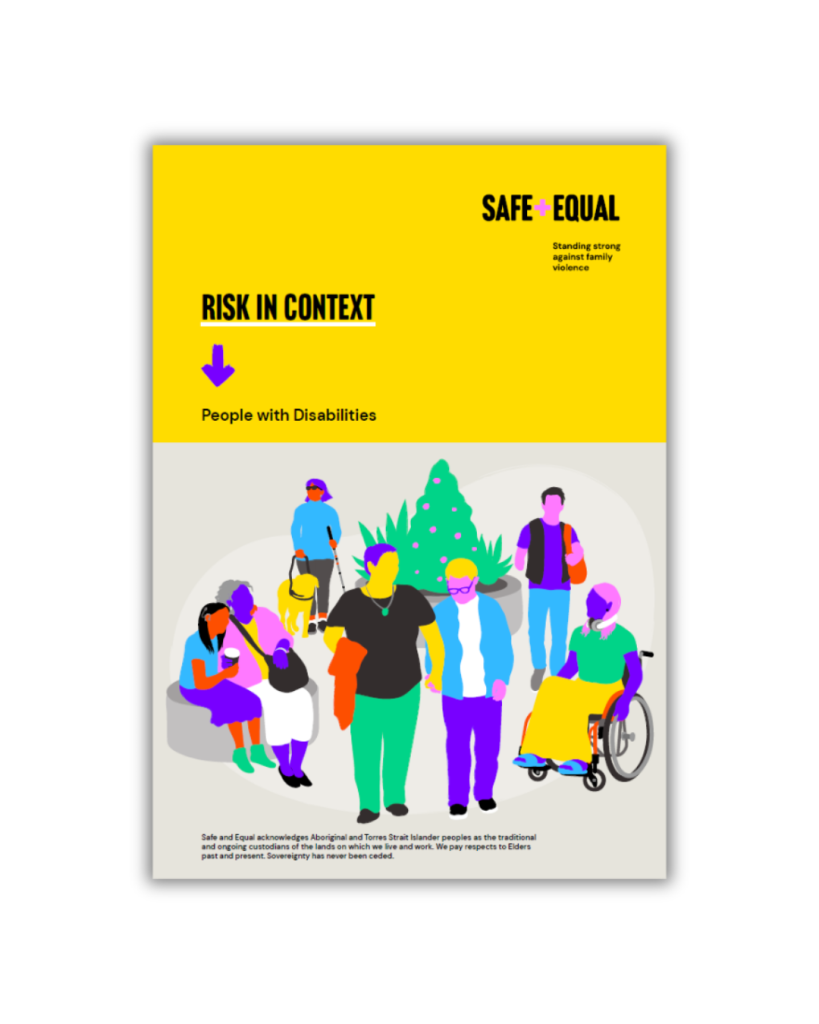
The Risk in Context series supports practitioners to apply an intersectional lens when undertaking MARAM risk assessment. This guide provides practitioners with insights, research and guiding practice questions to deepen understanding, enhance their practice, and strengthen family violence risk assessment practice for people with disabilities.
This document contains a Theory of Change (ToC) for engaging masculinities and men in the primary prevention and early intervention of family and gender-based violence.
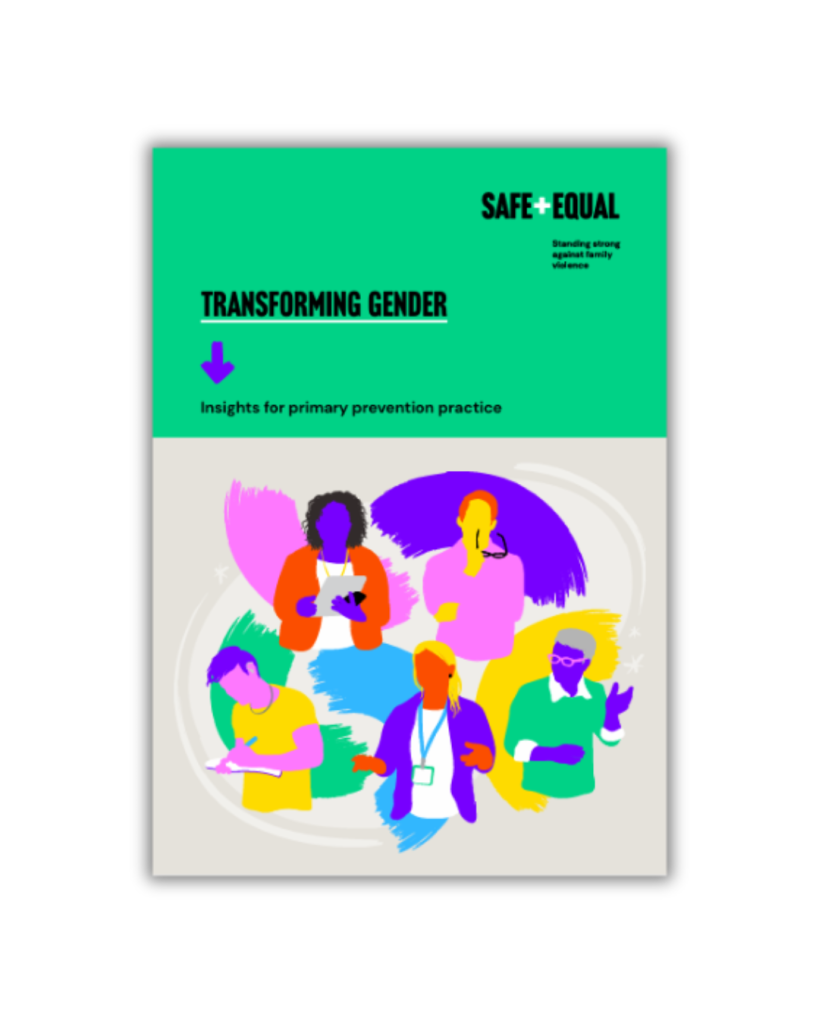
This resource explores gender transformative practice in primary prevention, which can be used for planning, reflection, peer discussion and supervision. It draws on interviews with experienced prevention practitioners from a range of backgrounds and contains practical prompts to develop your own practice further.
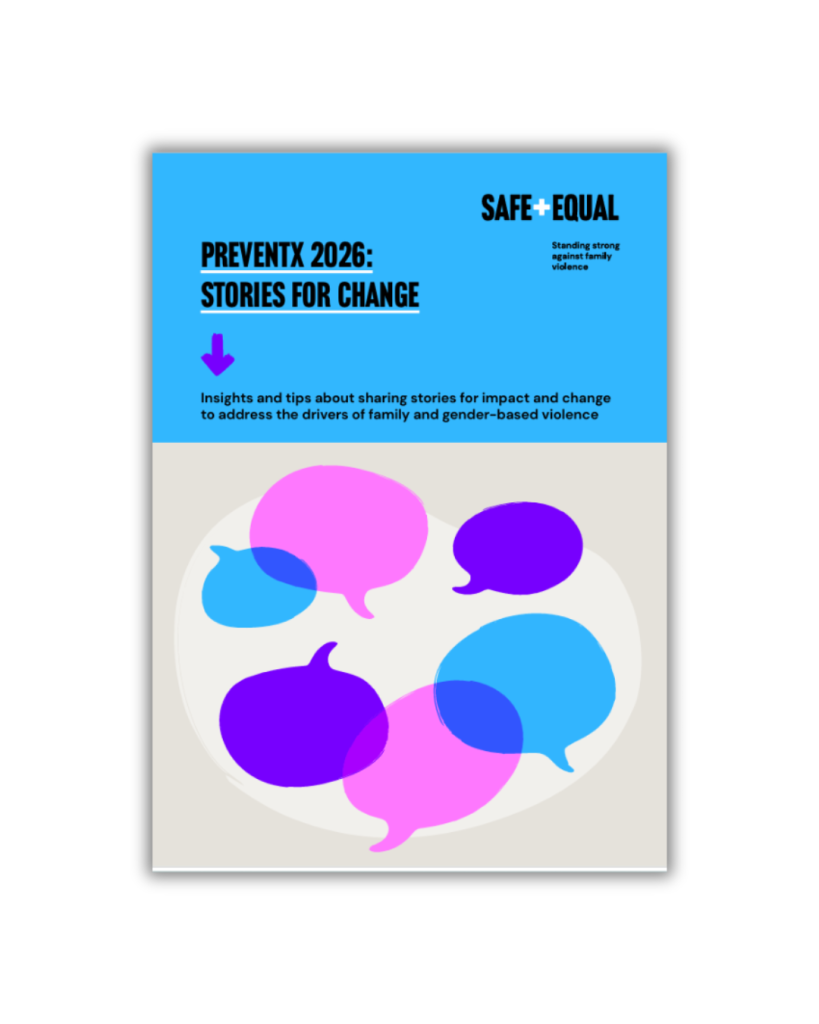
This resource shares insights and practical tips from PreventX 2026’s Stories for Change conference. It highlights how ethical, intentional storytelling can strengthen primary prevention practice and support long-term systems change.
In partnership with the Zoe Belle Gender Collective, Safe and Equal launched the first resource in the Risk in Context series – a practice guide supporting practitioners to work more effectively with trans and gender diverse communities.
Taking action against the drivers of family and gender-based violence has to be based on understanding the social conditions that predict and drive this violence. This animation is a new and engaging resource to engage your audience in conversations about what can be done to prevent family and gender-based violence.
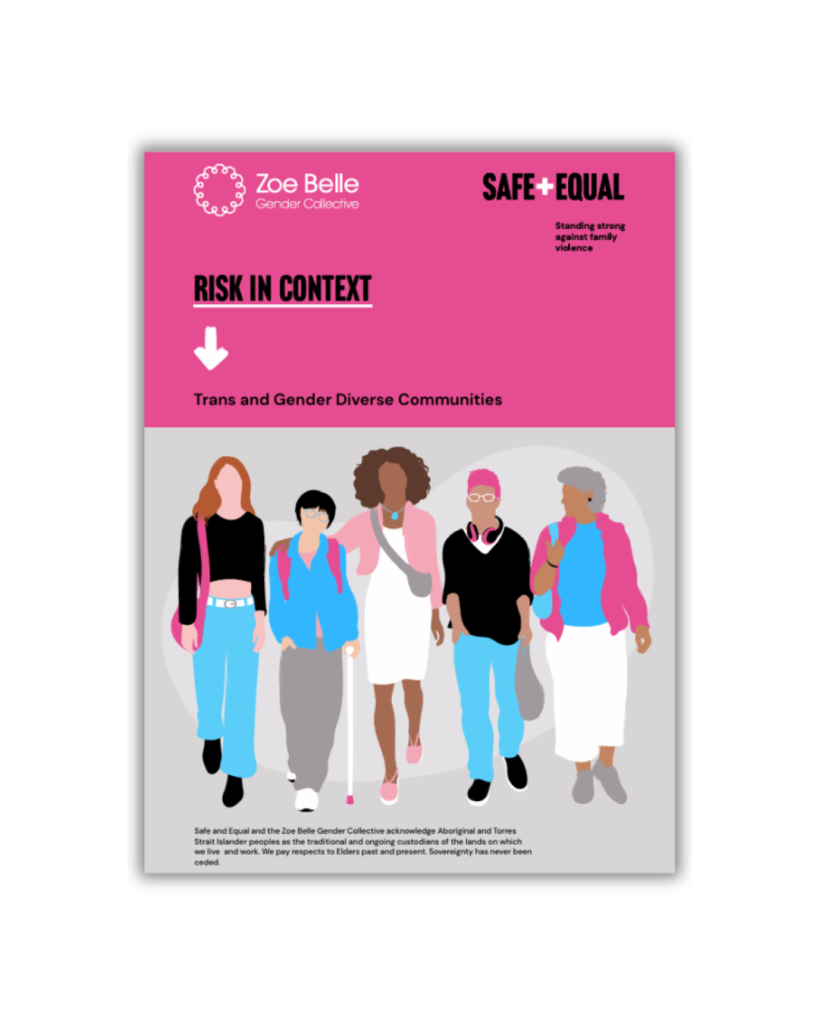
The Risk in Context series supports practitioners to apply an intersectional lens when undertaking MARAM risk assessment. This guide centres the lived experience of trans and gender diverse (TGD) victim survivors; providing practitioners with insights, research and guiding practice questions to deepen understanding, enhance their practice, and strengthen family violence risk assessment practice with the TGD community.

Explore the recordings from plenary panels held during PreventX 2026: Stories for Change.
BACK TO TOP
This resource is intended for non-Aboriginal family violence organisations seeking to genuinely centre Aboriginal women’s voices in their work. It draws from a partnership between Djirra, Elizabeth Morgan House and Safe and Equal, and shares the practical steps taken to ensure Aboriginal women shaped the process from the start.
The Risk in Context series supports practitioners to apply an intersectional lens when undertaking MARAM risk assessment. This guide provides practitioners with insights, research and guiding practice questions to deepen understanding, enhance their practice, and strengthen family violence risk assessment practice for people with disabilities.
This document contains a Theory of Change (ToC) for engaging masculinities and men in the primary prevention and early intervention of family and gender-based violence.
This resource explores gender transformative practice in primary prevention, which can be used for planning, reflection, peer discussion and supervision. It draws on interviews with experienced prevention practitioners from a range of backgrounds and contains practical prompts to develop your own practice further.