
Risk in Context
Trans and Gender Diverse Communities

The Risk in Context series supports practitioners to apply an intersectional lens when undertaking MARAM risk assessment.
This guide centres the lived experience of trans and gender diverse (TGD) victim survivors; providing practitioners with insights, research and guiding practice questions to deepen understanding, enhance their practice, and strengthen family violence risk assessment practice with the TGD community.
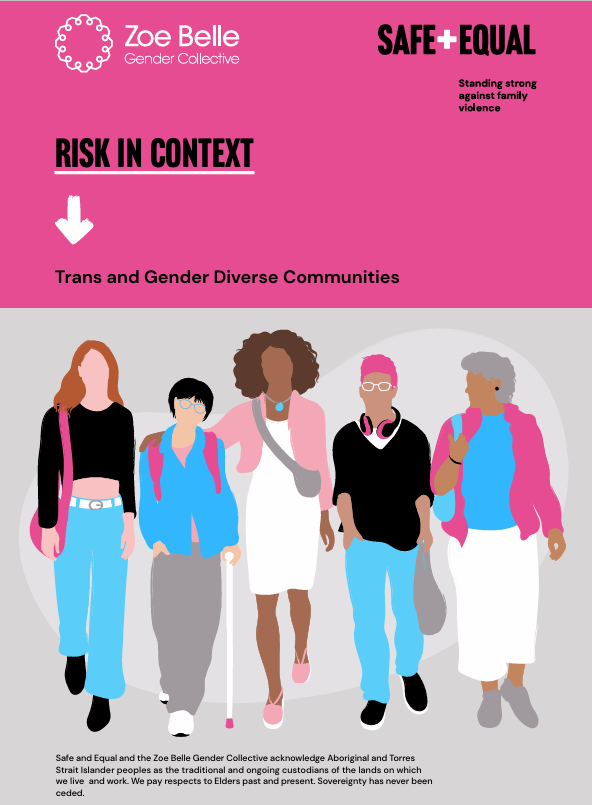
The Risk in Context series supports practitioners to apply an intersectional lens when undertaking MARAM risk assessment, recognising that evidence-based risk factors may present or be experienced differently across diverse communities.
In partnership with the Zoe Belle Collective, Safe and Equal are proud to introduce the first resource of the series, the Risk In Context – Trans and Gender Diverse Communities Practice Guide.
This guide centres the lived experience of trans and gender diverse (TGD) victim survivors; providing practitioners with insights, research and guiding practice questions to deepen understanding, enhance their practice and strengthen the service response received by the TGD community.
Designed for practitioners working at the Intermediate and Comprehensive MARAM Responsibility Levels, this resource provides practical examples and guiding questions to inform Structured Professional Judgement, contextualising key evidence-based risk factors for trans and gender diverse (TGD) victim survivors.
The guide works in conjunction with existing the Multi-Agency Risk Assessment and Management (MARAM) tools and resources, and with other guides to be released in the Risk in Context series — multicultural and faith-based communities, people with disability and people who use substances. It is designed to be used as part of a broader practice approach and is intended to deepen practitioners’ application of MARAM risk assessment rather than replace or stand apart from it.
Underpinning the guide is a commitment to intersectionality, recognising that TGD people’s experiences of family violence are shaped not only by their gender identity, but by the intersection of multiple identities and systems of oppression including cisnormativity, racism, colonialism, ableism and other forms of oppression.
Safe and Equal and Zoe Belle Gender Collective would like to thank the following organisations for their invaluable contributions to the development of the resource: Australian Research Centre in Sex, Health and Society (ARCSHS), Drummond Street Services and Queerspace, FVREE, Rainbow Health Australia, Thorne Harbour Health and Switchboard Victoria.
RELATED
RESOURCES

This recording features the presentation and panel discussion that opened workshop from the Connecting Communities program on Prevention with LGBTQIA+ multicultural and faith communities.
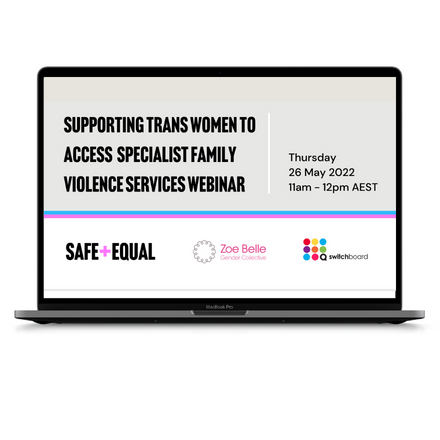
On Thursday 26 May, in recognition of the national day for the prevention of LGBTIQ+ family violence, we joined with Zoe Belle Gender Collective and Switchboard for a webinar centring on the voices of trans women of colour.
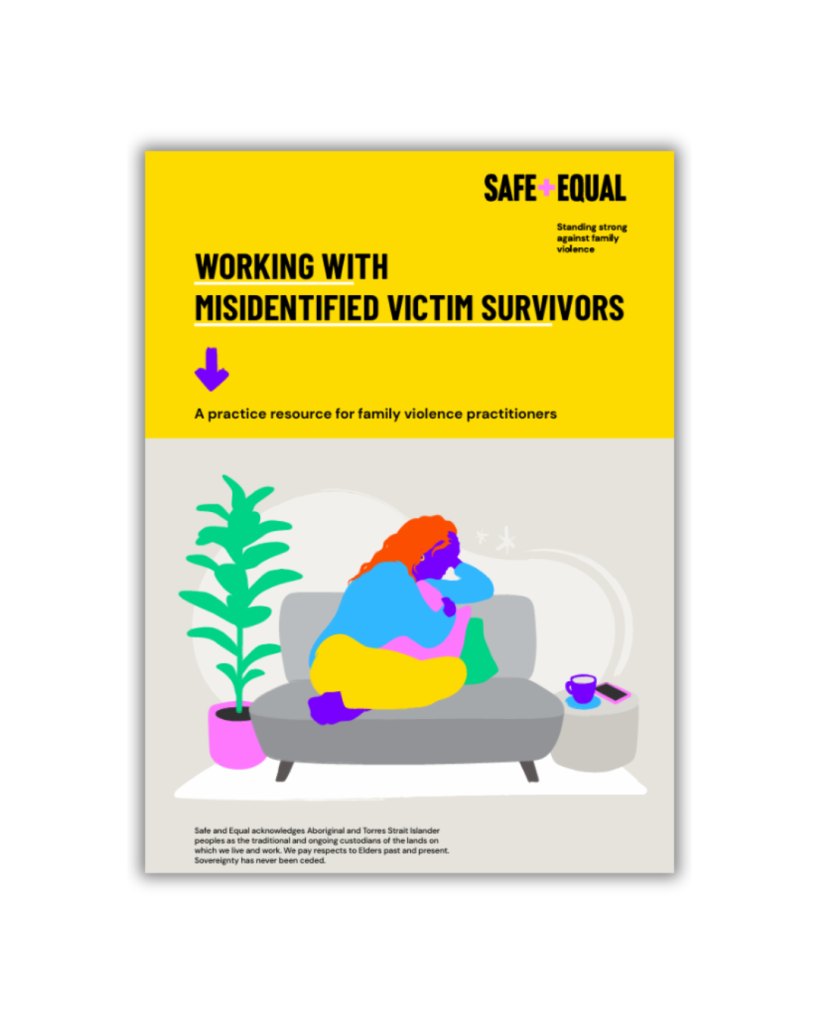
Informed by insights from lived experience advocates, this resource supports specialist family violence practitioners to strengthen their capacity to provide effective advocacy and support to misidentified victim survivors, deepen their understanding of misidentification and its impacts and address and mitigate the impacts of misidentification on victim survivors and their families.